
It’s past midnight, September 10th, 2012, and the streets of Portland are
deserted. A cold mist bathes the city and Michael King’s ragged, wet clothes
stick to his skin. He doesn’t mind. Living on the streets he’s used to feeling
grimy. And after a record dry spell, the rain feels good. He pops open a can
of Four Loko and dumps it into a half-drunk bottle of malt liquor, which he
calls a Sidewalk Slam. He sloshes the mixture around and takes a deep swig.
Michael passes the bottle to Josh Stinson, a 27-year-old clad in a frayed blue
shirt and jeans held together by a safety pin at the waist. The rain has invaded his dark tangle of strawberry-blond dreadlocks. Stinson takes a slug of
Michael’s concoction. It tastes like punch spiked with gasoline.
“Good, right?” Michael says.
“That’s lethal,” Stinson says, cringing and handing it back. “Did you siphon
it from someone’s car?”
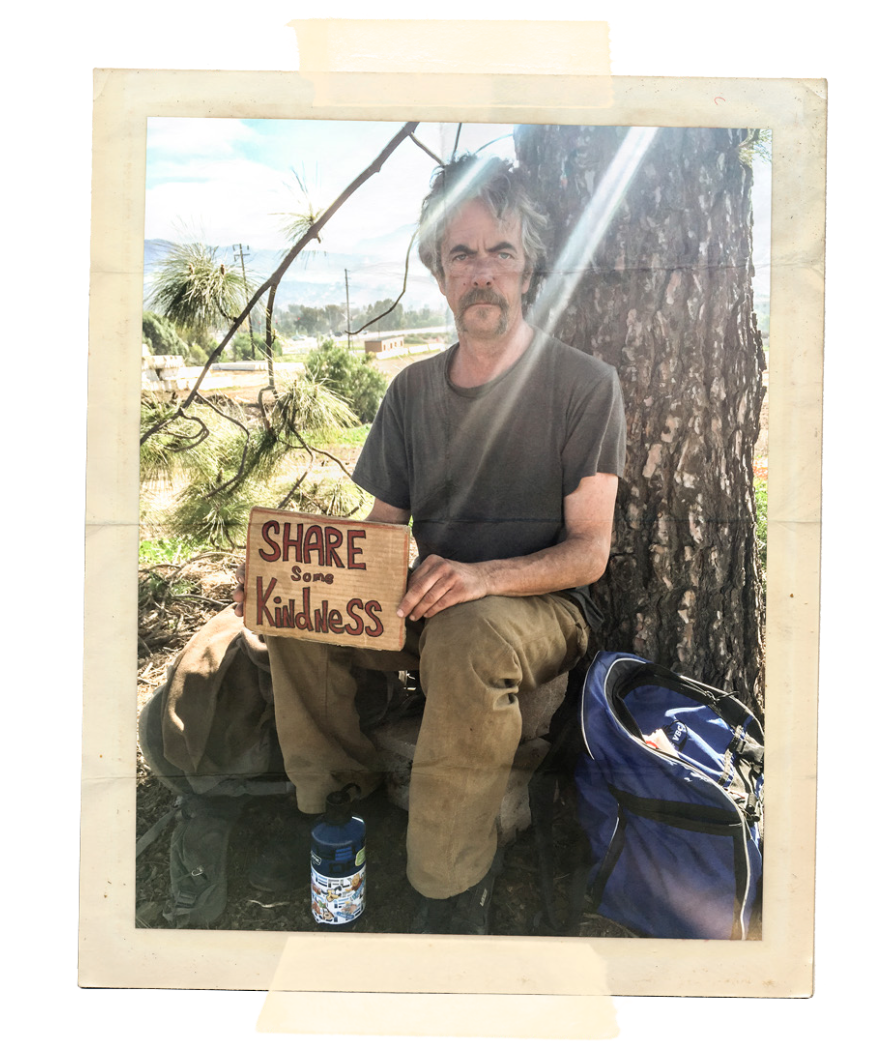
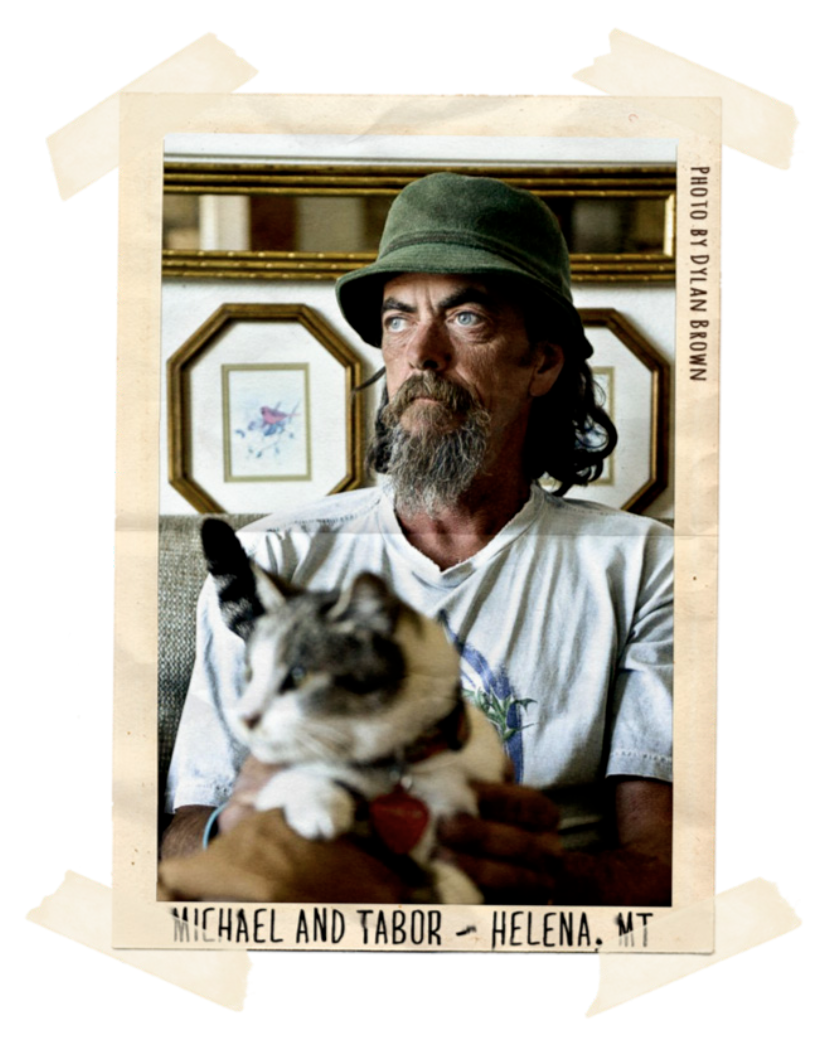
Michael downs the rest. At 47, he looks old and worn. His vivid blue eyes are
shadowed with dark bags and his sharp cheekbones sunken and heavily
lined after years of hard drinking. Ten years ago, he was a chef in St. Louis
and had a nice apartment. Now he has less than five dollars in his pocket.
They shuffle down Hawthorne, a boulevard lined with homeless encampments. The Sidewalk Slam lends them a small dose of warmth.
They slow in front of the Tabor Hill Cafe, a dingy old-time diner that’s closed
for the night. A stab of hunger breaks through Michael’s intoxicated haze.
The pictures of eggs, waffles and fries plastered on the windows make his
mouth water. A flash of white under one of the café’s outdoor picnic tables
catches Michael’s eye. He has a knack for finding unlikely treasures. Coins,
broken jewelry, half-eaten sandwiches. The other drifters call him Groundscore. Stooping, he peers into the shadows.
“What’re you looking for?” Stinson asks, kneeling beside him.

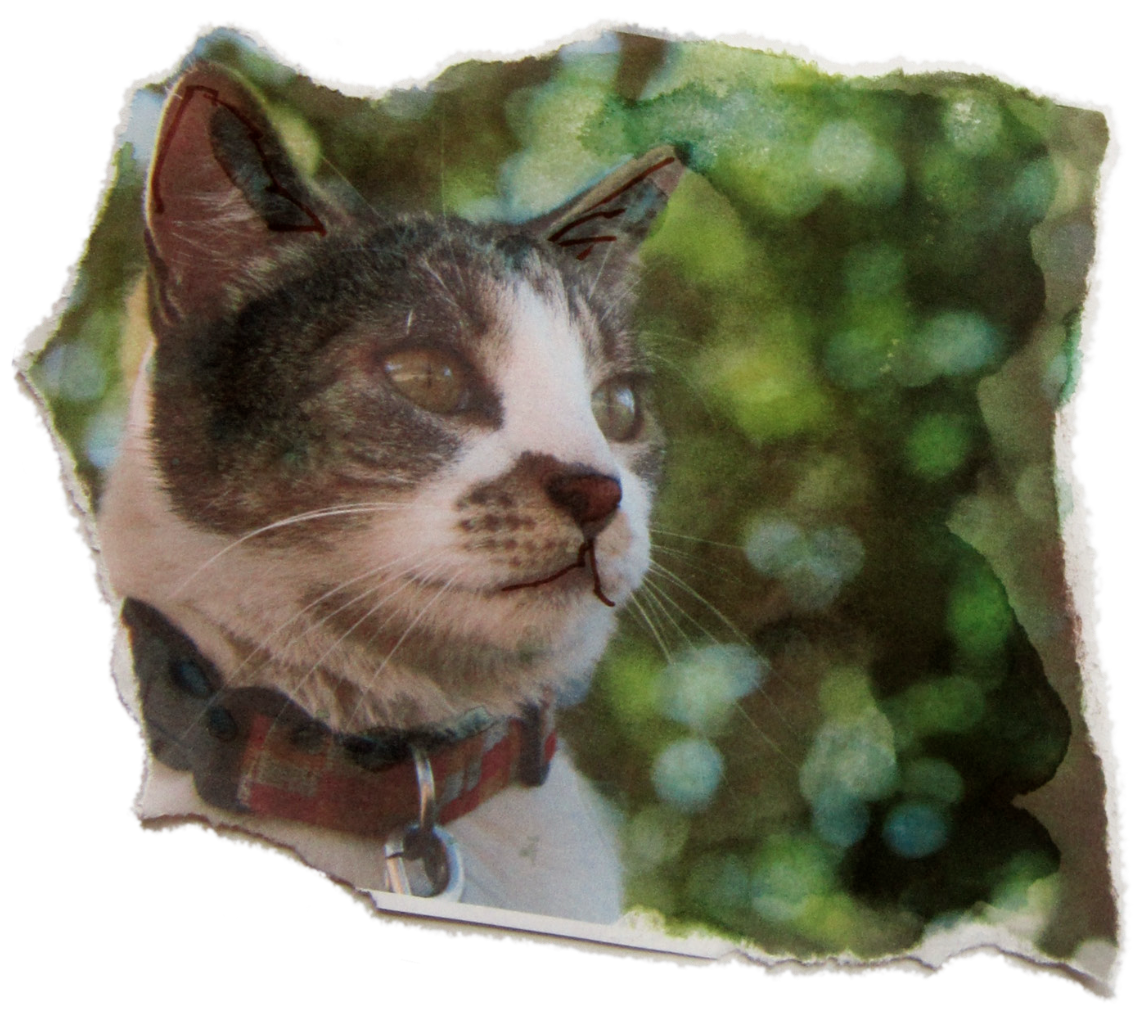
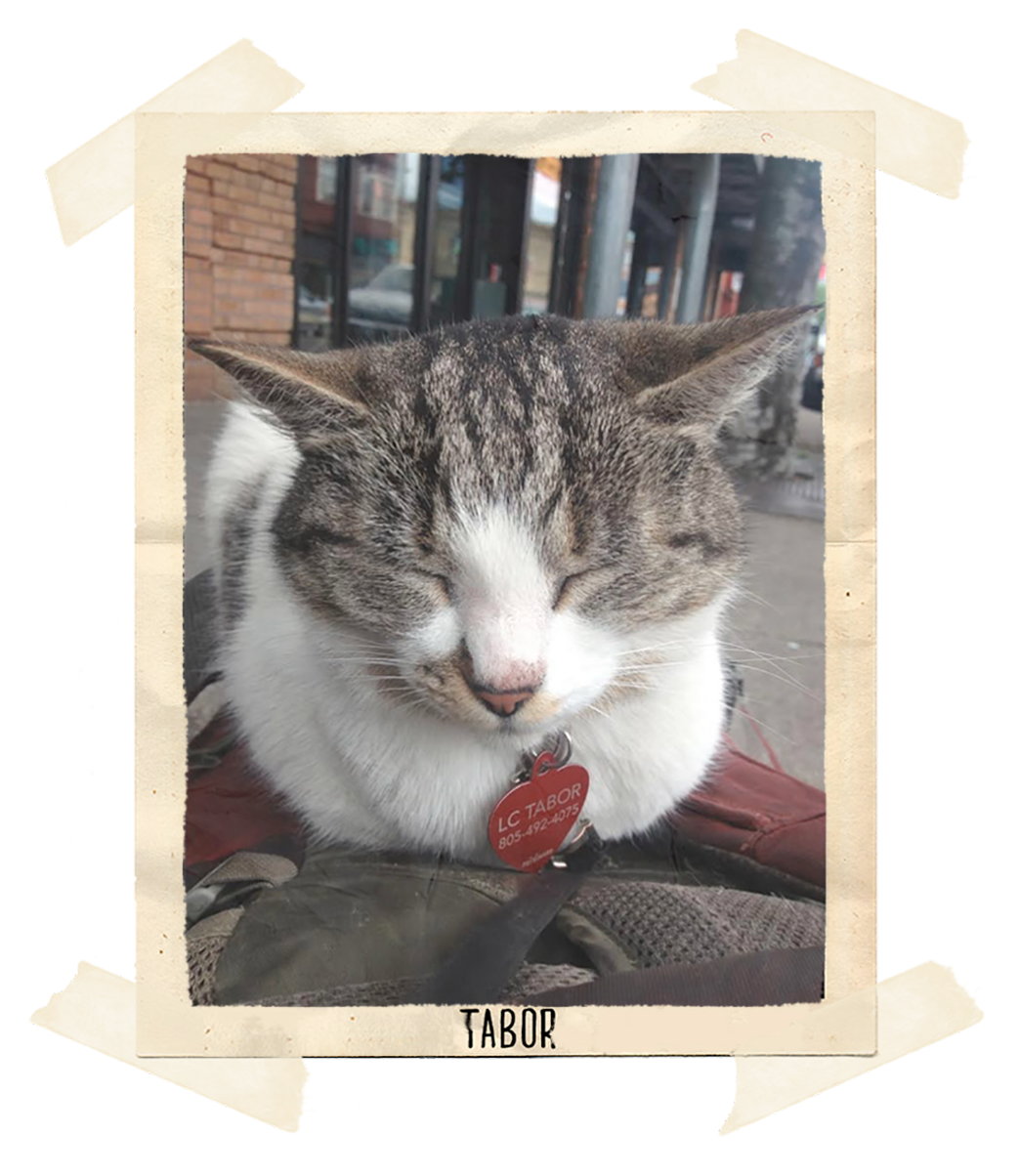
They’re met by the matted face of a soaked, shivering cat, her green eyes lit
with terror. Her stripy white fur is covered with dirt and motor oil. One of
her eyes is swollen and she has a raw wound on her cheek.
“Don’t spook it,” Michael says. The cat’s clearly been traumatized—the last
thing she needs is a couple of drunks trying to grab her in the middle of the
night.
Stinson doesn’t listen and seizes the cat. As he pulls the animal to his chest
and strokes her head, she doesn’t fight to get away. “Hey there, kittycat,” he
says in a soft, reassuring voice. “I think we should bring her back with us.”
“We don’t need a cat.” Michael’s been on the streets longer than Stinson. He
knows when you have nothing to offer it’s best not to try to help.
“Groundscore, look at her. She’s scared and she’s hurt.”
“Lemme see.” Michael takes the cat into his arms, and she burrows her face
into his hand. She’s so thin she feels almost weightless. Years ago, before the
streets, the booze, and the rain, he held someone like this, someone who was
healthy once and wasted away in front of him.
“Maybe we’ll keep her for a night.” He tucks the little tabby under his denim
jacket and they head back out into the rain.
Michael and Stinson take the cat back to their squat behind the UPS store on
Hawthorne. During the day, it’s a loading bay with trucks streaming in and
out. They have to wake up before business hours, stash their sleeping bags in
the bushes, and stay away till the shop closes. But at night, it’s home—quiet
and isolated, shaded by a sheltering red maple.
“Welcome to slum palace,” Michael tells the cat, setting her down on a dry
patch under the doorway. He expects her to bolt but she stays close and
sniffs around, waiting patiently as he sets up camp. Whatever, Michael
thinks, she’ll be gone by sunrise.
But in the morning something rough wipes across his cheek. He opens his
eyes to see the cat licking his face. Not yet alert, he cracks a smile, pulls an
arm out of his sleeping bag and rubs behind her ear. She looks at him with
her puffy eye and meows. She’s clearly hungry, but he doesn’t have any food.
“You should go find someone else to take care of you,” he says, getting up.
He nudges Stinson awake. Time to trudge into the city to scavenge and “fly
the sign,” their bit of battered cardboard that says ‘Share Some Kindness.’
The cat watches them as they leave. Michael looks at her over his shoulder
expecting that it will be the last time they see the animal, but when they get
back at the end of the day, she’s still standing watch, her tail flicking impatiently.
“Look at that,” Stinson says, smiling. He feeds her a piece of a cheese sandwich he found on the street and the cat devours it in twitchy, panicked bites.
Later, Stinson and Michael silently smoke their roll-ups and share a
32-ounce water bottle filled with what Michael calls “a wakeup”—a mix of
any available alcohol. While they drink, the cat bats around a scrunched-up
cigarette pack, leaping and zooming around. Michael can’t help but laugh as
the cat vaults into the air and whacks the packet.
“She’s funny,” Michael says.
“Maybe we should keep her,” Stinson suggests.
“That’s a bad idea,” Michael says, trusting reason over emotion. Any money
they scrounge together goes to booze; he’s not about to buy cat food with it.
He scrunches into his sleeping bag and tries not to focus on the hardness of
the ground. All he wants to do is fall asleep, but the cat creeps up once he’s
settled and sniffs around him.
“What do you want?” She comes closer and sits in front of his face, her tail
twitching. “I don’t have anything.”
“I think she wants in your bag.”
Michael closes his eyes for a while but sleep doesn’t come and his buzz wears
off. When he opens his eyes, she’s still there, staring down at him. “OK, kitty,”
he says, lifting the flap. “You can sleep with me tonight.”
The cat crawls in and snuggles up by his chest. In a minute, she’s asleep and
purring; a hypnotizing personal heater. Michael looks over at Stinson, who
shrugs. “She likes you,” he says.
“Maaata,” Ron Buss calls out. It’s been weeks since she disappeared on Labor
Day weekend but he hasn’t given up hope. He gets on his hands and knees
and scans the gloom of a crawl space beneath his neighbor’s porch. His cat
sometimes likes to nap there or disturb the nests of mice, but he sees nothing today.
Ron rubs his shaved head and straightens his black Ministry rock T-shirt. A
short, stocky man in his early 50s, he has a gap between his two front teeth
that gives him an earnest, boyish look. As a kid, he dreamed of becoming a
rock star and that wide-eyed sense of possibility never left him, even after he
joined the family business, a storage locker company. After 25 years, he sold
his share of the company to his brother-in-law to begin a career as a collector, opening a guitar and record store in a disused office of the family company. He specializes in ’60s Fender Stratocasters, vintage amps, Beatles and
Stones records. In many ways, Ron never really grew up.
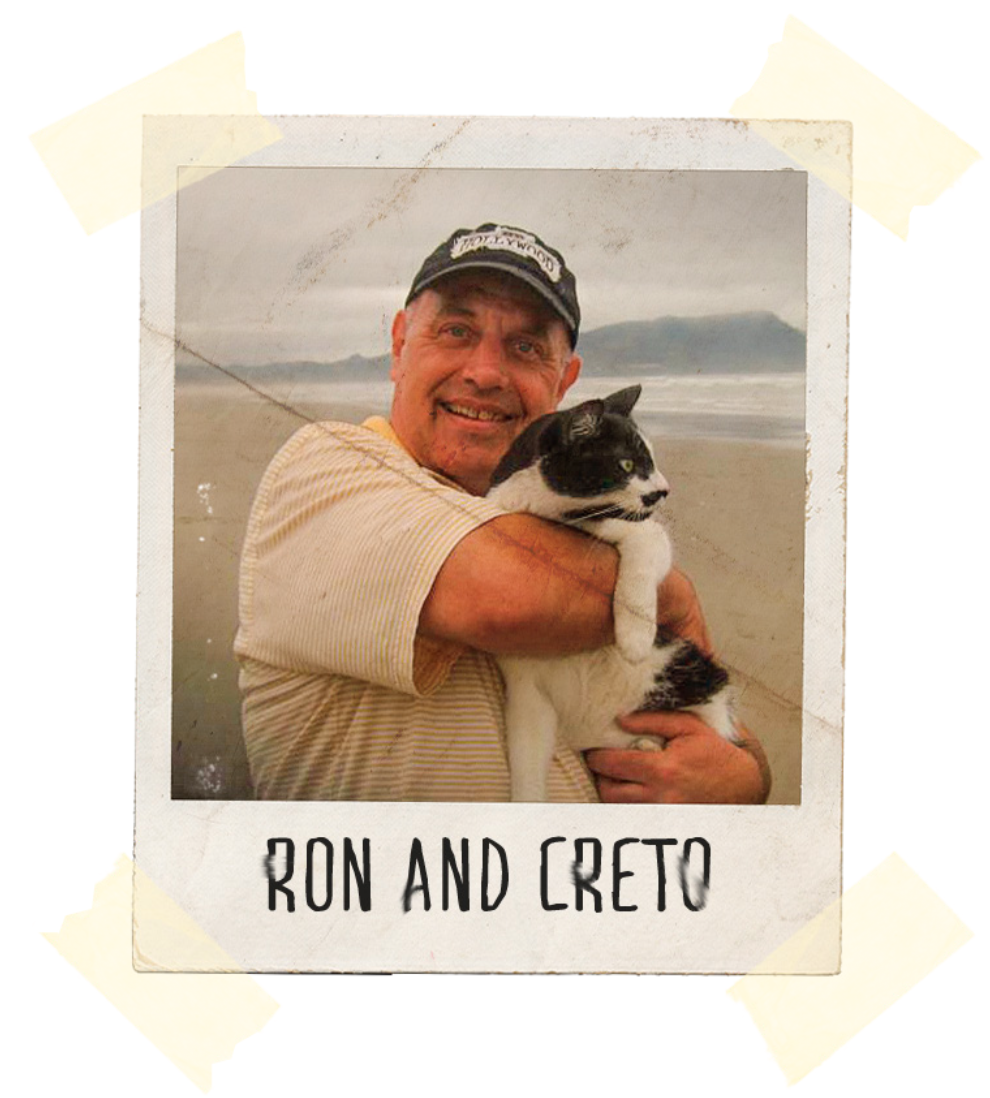
The only thing Ron loves more than rock ’n’ roll are his two cats. He takes
Mata Hairi and Creto everywhere: the beach (waves scare them but Ron
thinks it’s “character building”), parties (“cats are thrill seekers too”). He
writes them songs on his acoustic guitar (“cats are rockers at heart”) and
throws them elaborate birthday parties. He feeds them organic chicken and
wild-caught salmon.
Years ago, after someone left three Siamese kittens and their mother on his
doorstep in a cardboard box with cruel cooking instructions scribbled on
top, Ron couldn’t stop rescuing strays. He became the de facto neighborhood
cat lady. His cats meant the world to him. But Mata was a bit of a rambler,
roaming a three-block patch and sometimes disappearing for a night. Once
she ended up in the trunk of a neighbor’s car and rode all the way to Vancouver, Washington. Now it looks like she’s gone again.
He walks the streets around his white and gold bungalow in Portland’s lush,
leafy Richmond neighborhood, calling her name. “Maaa-ta, come on,” he
pleads to no one. “Don’t do this to me.”
By October, it’s clear that the cat has no intention of leaving Michael. Every
day when he returns to the squat she’s there waiting. She rubs against his leg
and meows until he bends down and picks her up.
“Damn it,” he grumbles to Stinson, in spite of his happiness at seeing her,
“this cat’s sticking around.”
Stinson has been feeding her scraps of whatever he can find behind the food
trucks. She’s already looking healthier. Her puffy eye is healing and it’s clear
that she’s a beauty, no more than two or three years old, with tiger-striped
patches and soulful eyes the color of eucalyptus leaves. Michael takes to
calling her Tabor after the cafe where they found her.
Tabor starts sniffing for treats as soon as they come back from panhandling.
She rubs against their legs, meows, and stares up at them with anticipation.
“She’s beautiful, isn’t she?” Michael says one day, as if seeing her for the first
time.
“Yeah, she is,” Stinson replies, feeding Tabor one of his cold fries. “It’s cool
to have a cat around. I love it when they scoop food with their paws. It’s so
damn cute.”
“Not if it’s greasy,” Michael snaps, feeling a surge of protectiveness. “You
can’t give her junk like McDonald’s. It’ll mess with her liver.”
“Whaddya know about cats?”
“I know enough,” Michael says, heading back towards the street.
He returns 15 minutes later with a pint of milk and a can of Meow Mix. He
opens the can and pours the milk into a scavenged plastic lid. When Tabor
sees the food, she dives right in. It’s the first time in a while that Michael
hasn’t spent what little money he has on booze.
One morning, when they head out, she follows them, meowing. For some
reason this morning, she doesn’t want to stay at the squat. Michael stands in
front of her, not sure what to do. In a whoosh, she zips up his leg and claws
her way up his chest.
“OK, little lady,” he says, laughing. “You can come with us today.”
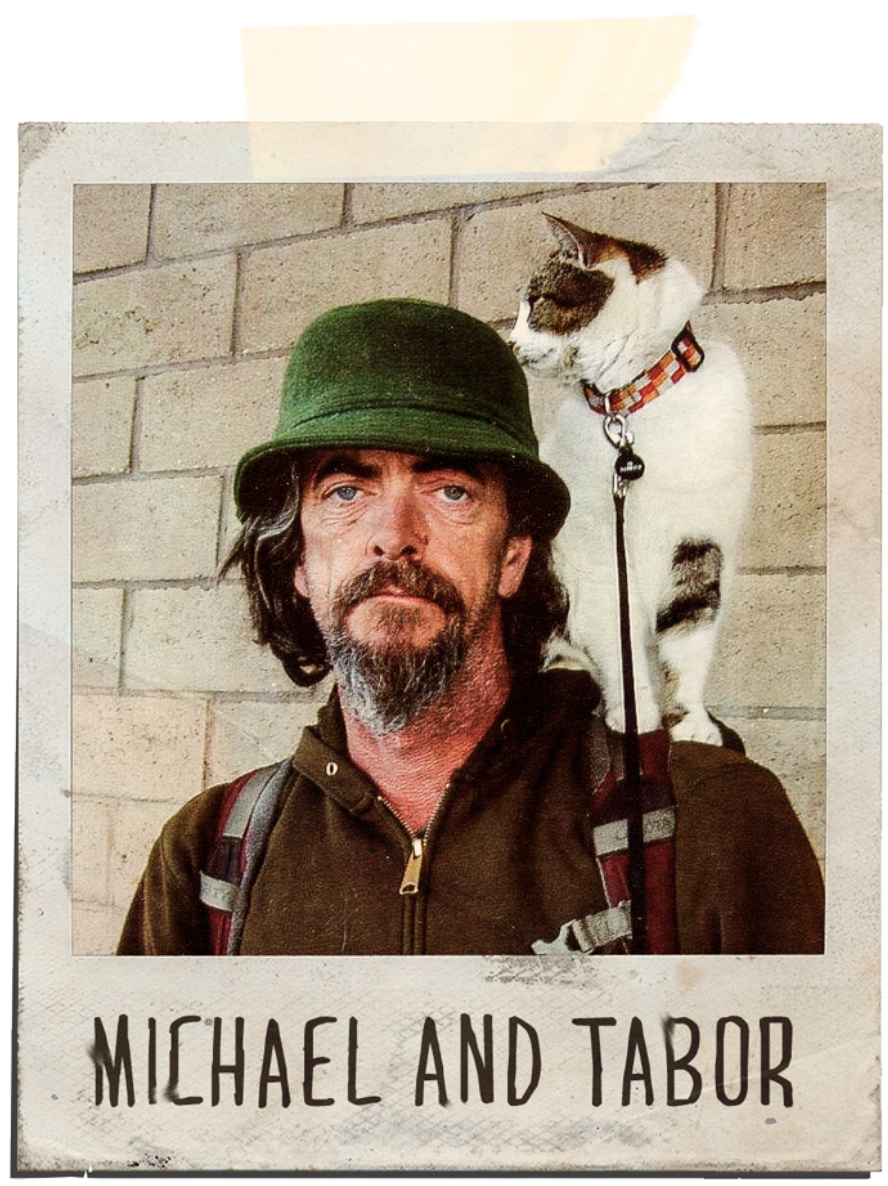
Walking down Hawthorne, she crawls onto his shoulder, balancing there like
an oversized parrot. People on the street notice them and smile. Every few
blocks, someone stops to swoon over the cat, handing them money for cat
food. It’s a strange feeling. Michael is accustomed to people avoiding him.
On the sidewalk outside the New Seasons supermarket, they see a friend, a
skinny, shaggy-haired 19-year-old drifter named Kyle who sometimes shares
the UPS squat and has lived on and off the streets since he was 14. He squints
and says, “Wow, you got a cat. Didn’t know you wanted a cat.”
“I didn’t,” Michael shrugs.
“You think she has an owner?”
“She’ll go back to where she came from eventually. I’m not stopping her.”
“Maybe we should look,” Stinson says.
“Yeah,” Michael says, as if he’s remembering something. “Guess we should.”
Michael and Stinson begin scanning the Lost Cat posters as they wander
around town.
“I just don’t get it,” Michael says, glancing at the cat on his shoulder, blinking drowsily, annoyed that they didn’t see a single poster for her.
Eventually, Stinson snaps a few pictures of Tabor and posts them on Craigslist. After weeks of effort and no sign of an owner, he turns to Michael and
says, “Well, Groundscore, looks like she’s yours.”
You can’t own a cat, Michael thinks, especially when you don’t own anything
else. But he smiles anyway.
One morning during a cold snap, Michael wakes up to find frost covering his
bag. Tabor had climbed inside his sweatshirt to absorb as much warmth as
possible. Almost time to head south, he thinks.
On December 3, celebrating his 48th birthday with his pals at the Lone Fir
cemetery, Michael takes a swig of Wild Turkey. It’s one of those wet,
bone-chilling nights, and the whiskey can do only so much. As he passes the
bottle, he announces, “Tabor and I are going to California.”
“That’s a pretty long hitch,” says Crazy Joe, a whippet-thin guy in his late
40s with a messy mop of dirty-blond hair. “How you plan on travelin’ with a
cat? First class or coach?’”
Everyone except Stinson laughs.
Michael knows it’s mad to travel with an animal. It adds weight to an already
heavy pack. He just wants to survive the winter and the cat is only going to
make that harder.
But he can’t leave her.
“It’s a compulsion of the heart,” he tells Stinson later that night. “I wanna
show her the sights.”
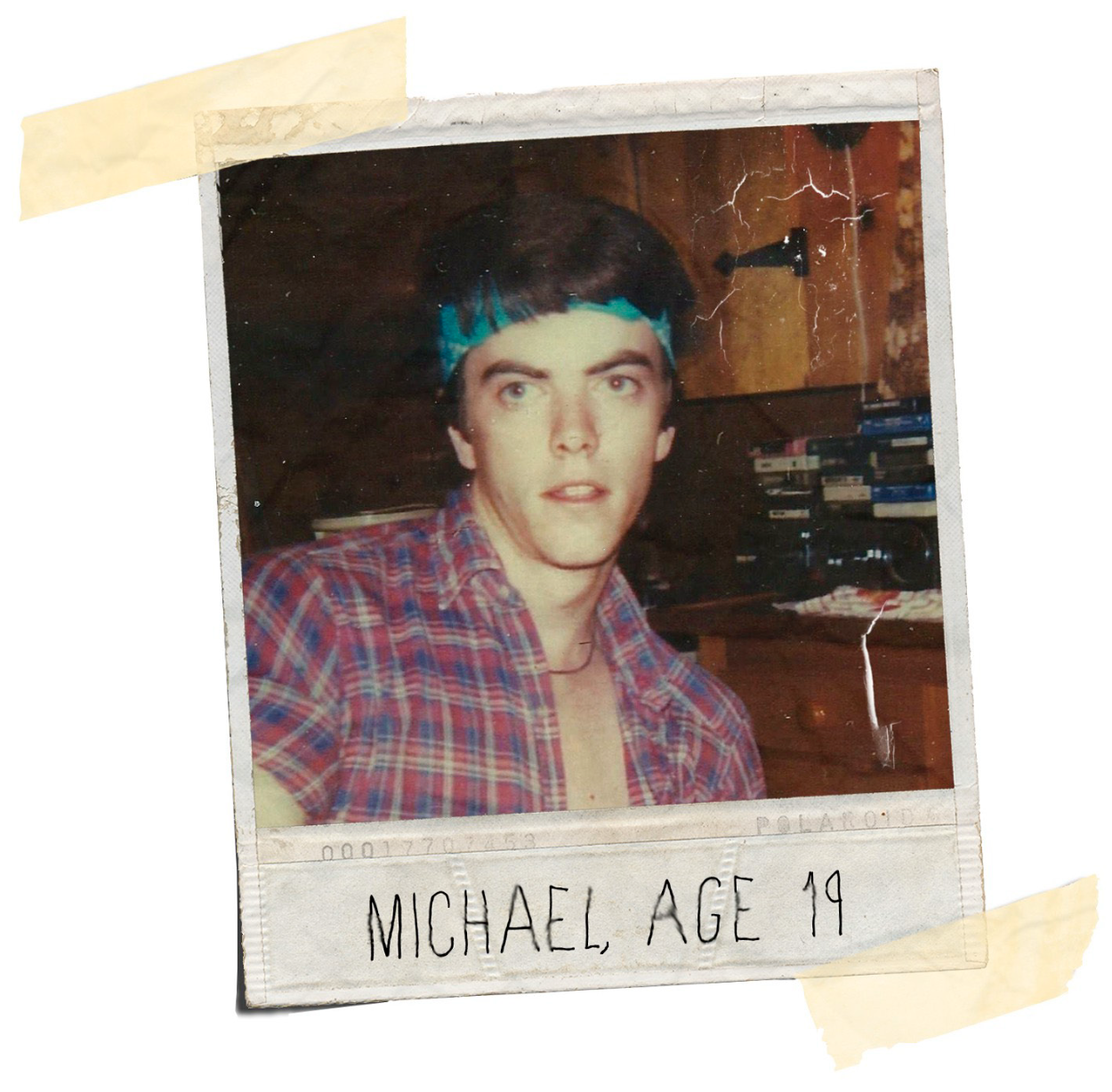
The first time Michael ran away, in June 1978, he was 13 years old. He packed
a little duffel bag and snuck out in the night with his twin brother, John
Patrick, or JP as he was called. They walked all the way down the railway
tracks out of St. Louis. They got as far as New Mexico before being hauled
back home in handcuffs. Two years later, his dad caught him smoking weed
in the backyard, flew into a rage, and checked him into rehab. He escaped
and hitchhiked out of town. His dad put out a missing person report. After
Michael kept running away, his parents didn’t want him back.
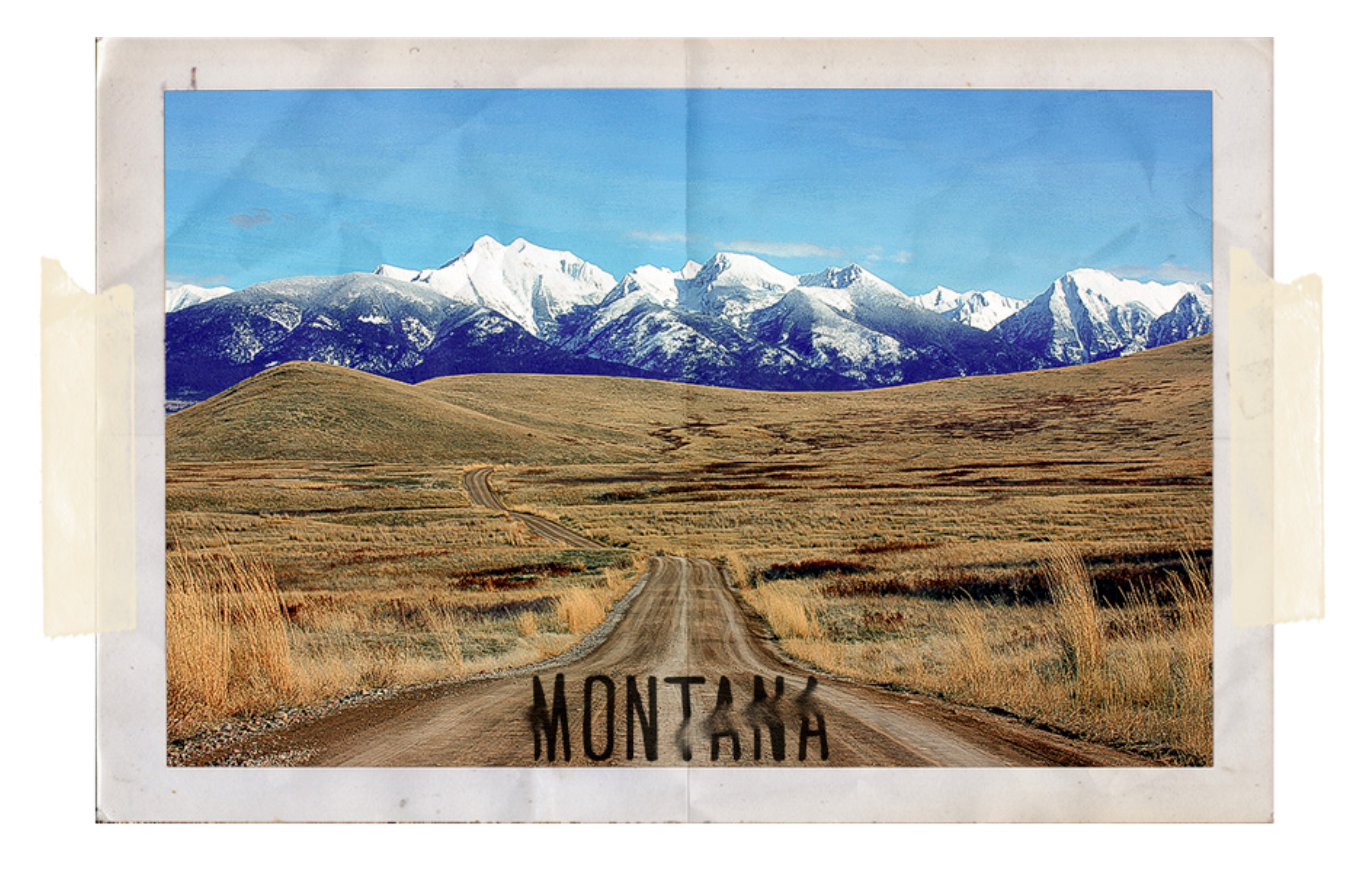
In 1981, at 16, Michael wound up in Montana. With its sawtooth mountains
and sun-seared plains, it was the wild, uncultivated place he’d been looking
for. “All you can see is a little landscape and a lot of sky, and not a soul for
miles,” he wrote on a postcard to JP back home. He got a job delivering milk
in Helena, found a room in a cheap guesthouse, and forged his dad’s signature on the enrollment form at the local high school.
Eventually, an administrator demanded to meet his parents. Michael, thinking quickly, went looking for a dad. In St. Louis, he had met adults through
the Alcoholics Anonymous program his father sent him to. Michael didn’t
like rehab but was impressed by the kindness of the people he met in AA. He
figured that it was as good a place as any to find a guardian, so he went to a
meeting in Helena and surveyed the adults sitting around him in the circle.
One man caught his eye—Walter Ebert, a divorced Vietnam vet and recovering alcoholic with a gruff personality. What struck Michael was when Walter
started talking about cats and dogs. He lived alone with a houseful of strays
he’d rescued. Taking care of the animals, he said, helped him stay sober.
After the meeting, Michael asked if Walter would pretend to be his dad so he
could stay in school, explaining that he’d run away from a bad home but had
a job and could take care of himself. He just needed a signature. “Sure, I’ll
help you,” Walter said, but insisted on speaking to his mother first. Over the
phone, Michael’s mother told him that if her son wanted to live in Montana,
that was fine by her. His parents signed him away.
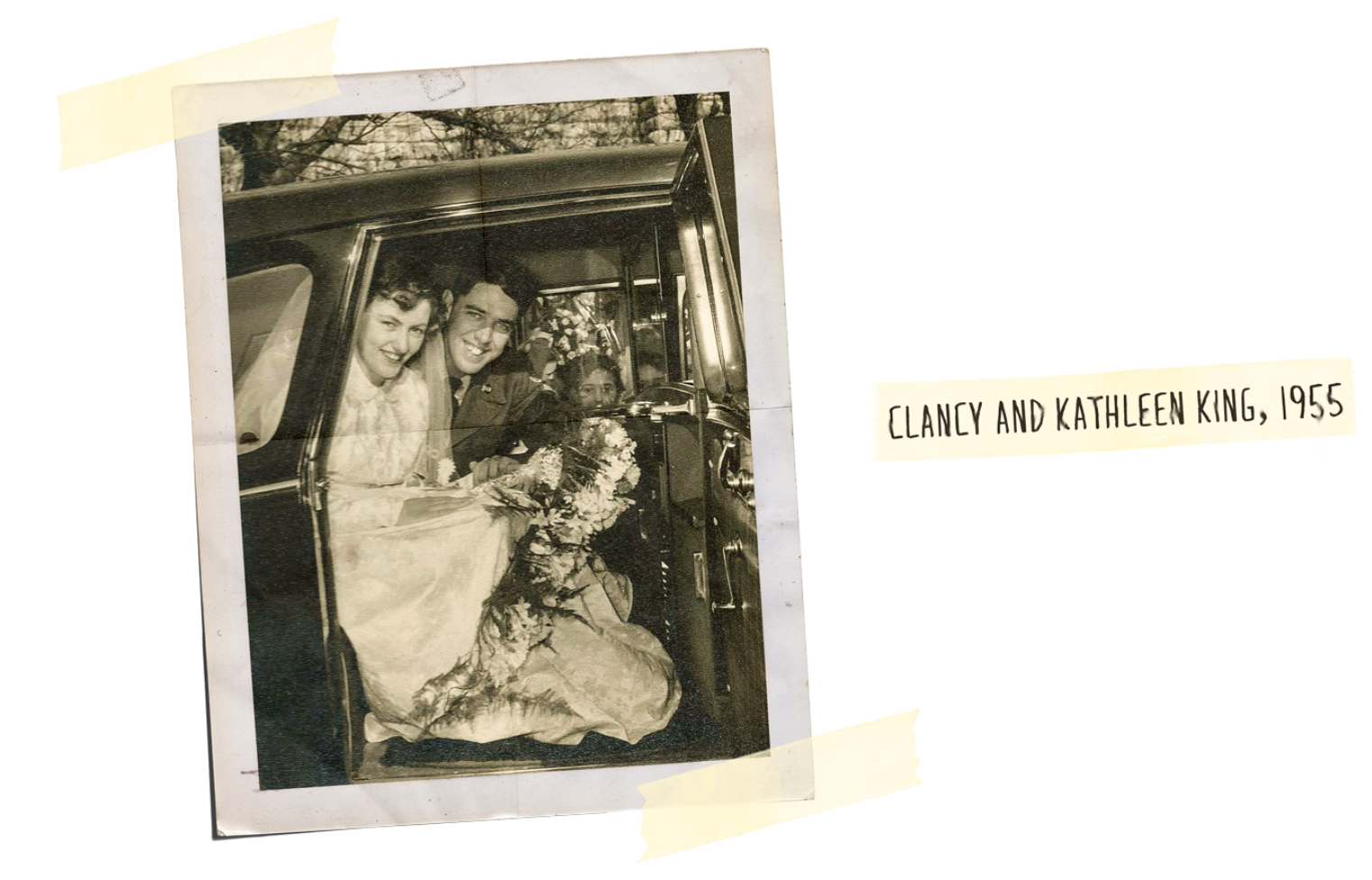
Michael did well in Montana. He graduated from high school and started his
own landscaping company. He bought a truck, advertised in the yellow
pages, and built up a business.
During those years, Michael had minimal contact with his twin JP, but he
went to St. Louis for his father’s funeral in August, 1990. As he rolled into
Missouri, he realized he didn’t want to see his family and be reminded of his
miserable childhood. He skipped the service and waited until everyone had
gone home, then went to the cemetery to say his goodbyes.
Afterwards, he headed straight for a bar, where he ran into an old high
school buddy named Mike Mercer. Mercer’s hair was shorter than Michael
remembered, his face a little thinner and older, but he had the same smiling
blue eyes. And Mercer was just as entertaining as ever. It seemed like those
nine years apart had passed in a blink. Soon they were doing shots together,
talking and laughing. The next day, they met up again and Michael decided
to delay his return to Montana. He felt more at ease with Mercer than with
anyone he’d ever met. Maybe it was the timing; loss has a way of making
room in our hearts. Mercer felt the same connection, and asked Michael to
move into his ramshackle apartment. Michael said yes, dropped everything
and left Montana behind.
Eventually Michael got a job as a chef at a bistro, and Mercer worked as a
cable guy. They settled into a quiet, domestic routine, punctuated by poker
games and occasional drug binges. On television after work, they watched as
the Soviet Union fell apart and as South Africa abandoned apartheid. It
seemed like the whole world was actually improving. Things could change.
They got a boat and, on weekends, took it to a nearby lake, where they drank
and floated around. Their trips were moments of quiet wonder for Michael.
In this new comfortable existence, he was able to admit he was in love with a
man. Michael was raised to think of it as a sin but this new, unexpected love
felt like a blessing.
For five years, it was idyllic until Mercer confessed he was HIV-positive. He’d
gotten it before they reconnected and was struggling to cope. Overnight,
Michael went from having the beginnings of a life and a future with Mercer
to preparing for his death. Michael held out hope that they could contain the
disease and, for 13 years, they did. The poker games continued, as did the
camping trips. Then, in the summer of 2003, the virus flared up. Almost
every day, Michael returned home from the restaurant to find Mercer looking worse: skinnier, paler, weaker. The only person who truly loved him was
turning to dust.
On October 20th, 2003, while working, Michael got a call from the nurse he’d
hired, “Mercer’s going, come home.” By the time he got to his bedside,
Mercer was fading in and out of consciousness. He held him as he passed,
gazing at his one great love through tears, memorizing the details of his face,
the way his dark, silver-flecked hair fell across his cavernous cheekbones.
Michael knew he couldn’t stay in St. Louis. The things they had accumulated—the Ford F-150, the new Subaru, the boat, the big-screen TV, the
stereo—suddenly felt worthless to him. He packed a backpack with a few
clothes and precious photos. He emptied the contents of the fridge in the
backyard, leaving the food in heaps for the squirrels, possums and raccoons.
Then, scribbling on the back of a Post-It, he dropped the note in the neighbors’ mailbox: Help yourself to everything. All keys are on the coffee table.
He walked to the nearest highway and hitched a ride west. It felt strangely
liberating to be walking away with nothing.

Nine years later, Michael trudges down the side of Interstate 5 through a
snowstorm. He scavenged a pet carrier and strapped it to the top of his
backpack; Tabor huddles inside under a fleece. He walks for hours with his
hand shoved above his head into Tabor’s blankets, trying to pass some
warmth between them. The trucks blast past; snow piles up on the pack and
on Michael’s clothes.
The patchwork of suburban neighborhoods south of Portland gradually
turns into rolling, forested hills. After seven hours with no ride, Michael
stops, his stomach churning and his fingers numb. Tabor has gone silent.
They need shelter or they won’t make it through the night. He puts the
backpack down and shields his eyes from the snow. Looking through the
jumble of snow-dusted pines, he sees a derelict barn. Michael stomps
through the snow and pushes the rotting door open.
Inside, the barn is dusty with straw and seed husks, but it’s dry. Slumping
down on a pile of decomposing old horse blankets, Michael builds a fire and
warms his numb fingers. He prepares two dishes: a grilled-cheese sandwich
for himself and a bowl of Meow Mix and warmed-up milk. Once he’d been a
chef at fancy restaurants, and now he’s cooking for a cat in a falling-down
barn in a blizzard. Then again, he thinks, it’s nice to have someone special to
cook for again.
As the fire burns down, Michael slides into the sleeping bag and dozes.
Michael and Tabor are back on the road before dawn and, though it’s bitingly
cold, their luck improves. They get a couple rides in quick succession and
make it about 200 miles to Sisters, Oregon, a picturesque town that looks
like it hasn’t changed much since the 1800s—there’s a main street with
covered walkways and bars with names like Bronco Billy’s and Three Creeks
Brewing. Michael settles outside a general store, panhandling. It’s almost
Christmas and people are generous. He gathers tons of cat food and over a
hundred dollars. Normally, he’d blow it all on booze, but tonight he restrains
himself to a half pint of whiskey. For once, he's going to treat Tabor to a
proper bed.
Through snow flurries, he spots a rundown hodey, what drifters call a motel.
He hustles inside and pays for three nights in an orange-carpeted room.
There’s a ratty floral bedspread and patches of mildew in the bathroom, but
to Michael it feels like the Ritz. He turns the TV on, slides into bed and flips
through channels. The movie Babe comes on and Tabor perks up. She watches the talking animals and then leaps towards the TV. Michael laughs as she
bats at the screen, trying to figure out how to get at the pig.
He gets a pizza from the vending machine and a tin of tuna for Tabor. They
eat in bed and then Tabor makes a nest under the sheets, snuggling against
Michael. As they lay together in the blankets, snow fills the street outside
and the neon sign casts a warm glow across the frosted windows. Michael
stares at the red reflection, thinking it’s one of the nicest Christmases he’s
had in years.
Back in Portland, Ron Buss decides to conduct a séance to figure out where
Mata Hairi has gone. He calls an animal psychic named Rachel recommended to him by a cat-loving neighbor.
“I’d like you to light a candle,” the psychic says in a soothing voice. “It will
strengthen the psychic bond with Mata.”
In a moment, he lights several tealight candles, and soon every space and
surface is glowing. “OK, it’s lit,” he says.
Rachel gasps. “There’s a person, like a rock that was fractured in many
places and glued back together, but the fractures still show,” she says. “This
person has her.”
Ron assumes she’s talking about his neighbor Jack, a hulking, muscular
biker in his mid-20s. He has more concrete reasons to suspect Jack. A year
earlier, Mata disappeared for several months. Ron searched frantically for
three days until Jack told him: “If Mata’s still alive, she’s probably somewhere in a forest in Washington State.” He claimed that she stowed away in
his trunk. When he got to Vancouver, he popped the trunk and she shot out
into the woods. Ron was furious. Why didn’t Jack tell him immediately? He
became convinced that Jack murdered Mata and constructed an elaborate
cover story, until he got a call from the Vancouver Humane Society letting
him know that they had found Mata. He brought her home but still doubted
whether the catnapping was an accident.
That evening, Ron’s best friend, Evan, a slight guy with short coppery-brown
hair, a pale Irish-mist complexion and arms inked with butterfly tattoos,
came over to get Ron out of the house. Across the street, Jack and his biker
buddies were partying in Jack’s front yard, screaming along to Guns ’N’
Roses for Ron’s benefit: “Bitching, fussing, cussing. I used to love her, but I
had to kill. Oooh, yeah, but I had to kill her…”
“Lemme in before I get accosted by Tony the gorilla out here,” Evan shouts
through the porch screen door. “Gawd, it’s like the house from The Exorcist,”
he says, standing in the doorway, surveying the living room glowing with
candles. “What is this… some spiritual shit?”
“It’s for Mata,” Ron replies, “to guide her home.”
Evan flops down on the sofa beside Ron. Creto, a lovely leggy tuxedo tom
with a crooked mustache, pokes his head round from behind a chair. He had
become clingy since his littermate disappeared.
“I miss her so much. Creto sits on the porch at night waiting for Mata.
During the day he creeps around the house like a nervous wreck. Seems like
the only thing that makes him happy anymore is mint ice cream.”
“Well, burning candles isn’t gonna bring her back. Wouldn’t it be more
sensible to go across the road and set that miserable bastard’s house on fire.
Preferably with him in it.”
“I need to find a cat whisperer,” Ron says, distracted, “someone who can
communicate with animals.”
“I know you miss her, but this is not healthy. You’re obsessed.”
“Obsessed? I’m devastated,” Ron says, in tears, “I’ve had Creto and Mata
since they fit into the palm of my hand. I found them, half-dead, mewling
weakly, their eyes almost glued shut… tossed out like garbage. I cared for
them around the clock… brought them back to life.”
A few days after the séance, Ron is doing a little gardening with Creto by his
side. He spots Jack walking toward him in a red T-shirt with LOTTO, GUNS,
AMMO, BEER in big letters across the front. Ron flushes with adrenaline. His
fingers are muddy from digging and he’s still holding a mug of coffee. “I know
you killed her,” he shouts, stepping in front of Jack and blocking his path.
Jack hesitates, confused. He has no idea what Ron is talking about. Though
Ron doesn’t believe in violence, he shoves him. Jack pushes him back, easily
knocking him to the ground.
Jack looms over him. “I didn’t touch your fucking cat. I’m not an animal
abuser.”
Ron staggers to his feet, grabs the coffee mug and flings it at Jack, hitting
him in the head. “You’re a black-hearted beast. I know you did something to
Mata.”
Jack touches his face, furious. “If you run around telling people I killed your
cat, you will disappear. I’ll take you out, and no one’ll ever find you. You
understand, you fat fishwife?”
Ron limps back to his house, convinced more than ever that Jack has murdered Mata.

The towns roll by as Michael and Tabor head south: Redding, Willows, Watsonville. They pass rice paddies, walnut orchards and grassy pastures with
cows and horses. Sometimes they hitchhike or ride a bus. Sometimes they
just walk.
Catching a lucky ride in an RV near Big Sur, Michael rolls down the window
and feels the sea breeze on his face.
Beneath a hazy purple sky, the RV swerves along the twists and turns of
Highway 1, frighteningly close to the cliff, the fierce, foamy water of the
Pacific swirling below.
“Look, Tabor. . . it’s the ocean,” Michael said, holding the cat up to the
window. “That’s where we’re going.”
Sprawled across his lap, Tabor watches everything, owl-like, purring at the
excitement of it all: the low-flying clouds scudding past, the puff plants
waving in the breeze and the cars whooshing by.
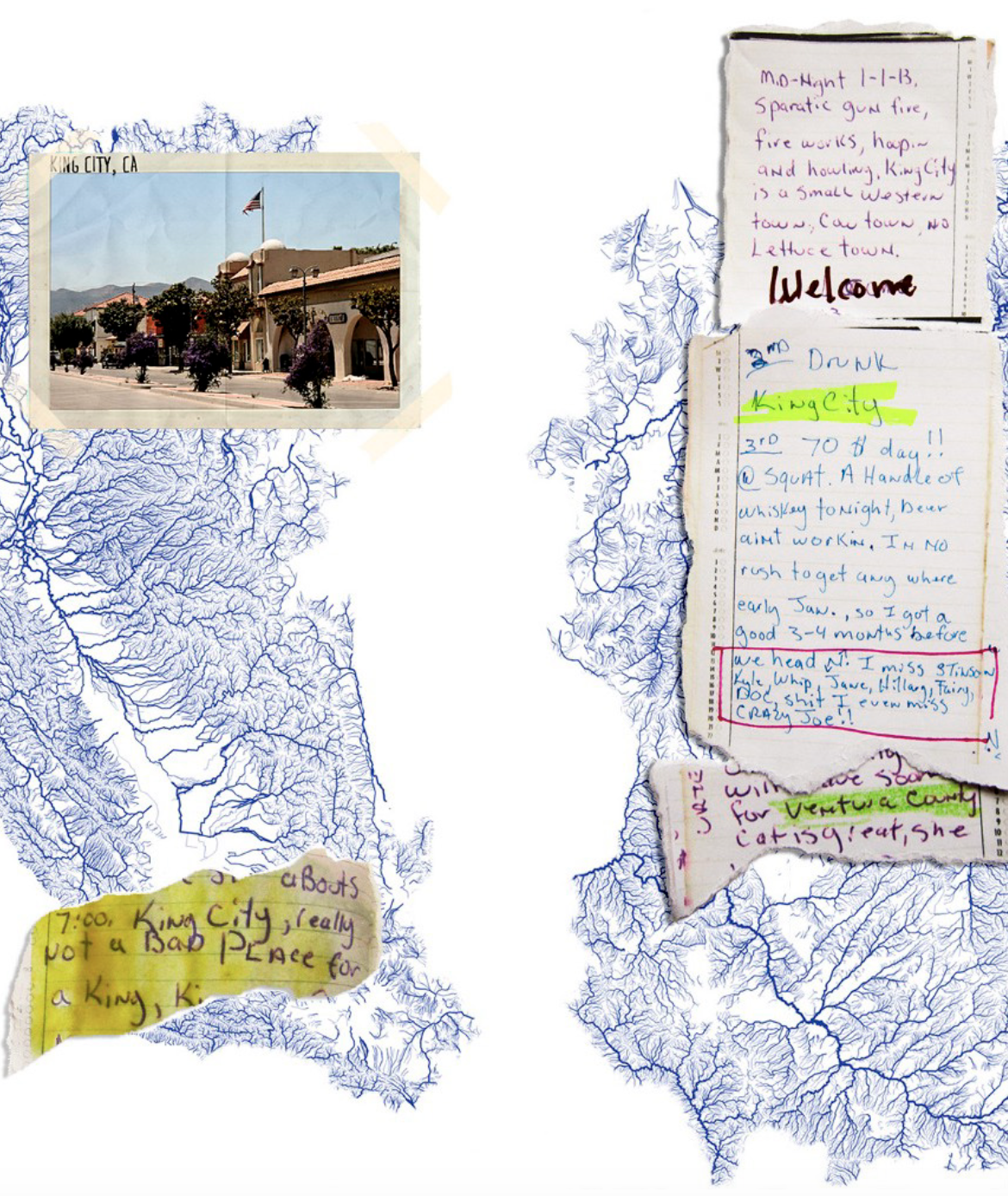
It’s early evening by the time Michael and Tabor hop out in Santa Cruz. They
stumble on a Mexican food truck that feeds the homeless for free. Michael
feels lucky to have found the truck, until a lady stops to stroke the cat and
starts asking questions. She wants to know why he lives the way he does.
“It’s just one of those things,” he says, with a wistful smile. “Guess I’m just a
wild animal running from fires.”
The lady can see the sadness in his eyes. “Here,” she says, handing him a
50-dollar bill, “treat yourself and the cat.”
The next morning, Michael is asleep on a heap of garbage bags in a deserted
alley, with a half-full bottle of whisky in the crook of his arm. Feeling a grip
on his shoulder, he opens his eyes to see a gruff, square-jawed policeman
standing over him, writing a ticket.
“You can’t sleep here. I’m fining you. ID?”
“What?” Michael, hungover and groggy, staggers up and falls back down. He
picks out a selection of state IDs, long-expired, which depict his face in
varying stages of despair.
“Montana?” the officer says, “Is that where you live?”
“Don’t live anywhere.” Michael notices Tabor’s leash on the ground and
jumps to his feet, panicked. “Oh, my God, Tabor, where are you?”
Tabor coolly walks around the corner of the alleyway with white petals of
jasmine stuck to her fur. As Michael scoops her up, he overhears the officer
talking into his radio, asking about Animal Control.
“No! The cat’s not a stray. She’s mine.”
“You were sleeping on garbage when I found you.”
“I’m sorry, officer, I just drank too much last night. I really look after this cat.
My number’s on her collar. Please don’t call Animal Control.”
“Sort yourself out, Mr. King. The next cop might not be as nice as me. Now
go on.”
Michael and Tabor’s next ride lets them off in Ventura beside a stretch of
highway tightly wound around the Pacific. Michael spots a sparkling inlet
dotted with surfers. The waves tumble end over end toward the beach and
the breeze carries the smell of warm creosote and salt. It looks beautiful
even through the haze of the whiskey.
As they approach the water, Tabor stares at the birds circling the surf. She
crouches, eyes wide, and dips her paws in the sea foam, then darts after a
seagull. She spends an hour chasing birds and comes back covered with sand
and seawater.
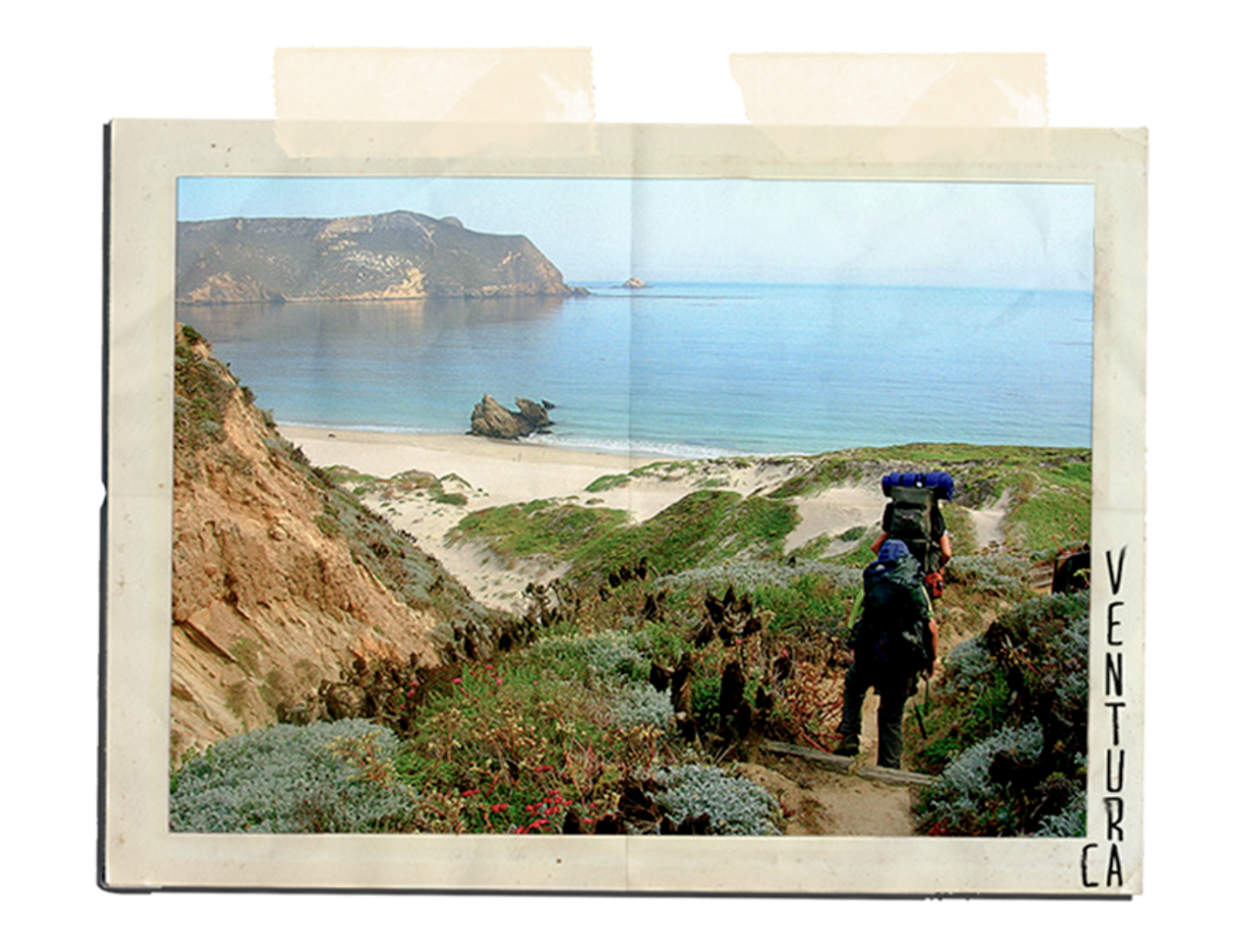
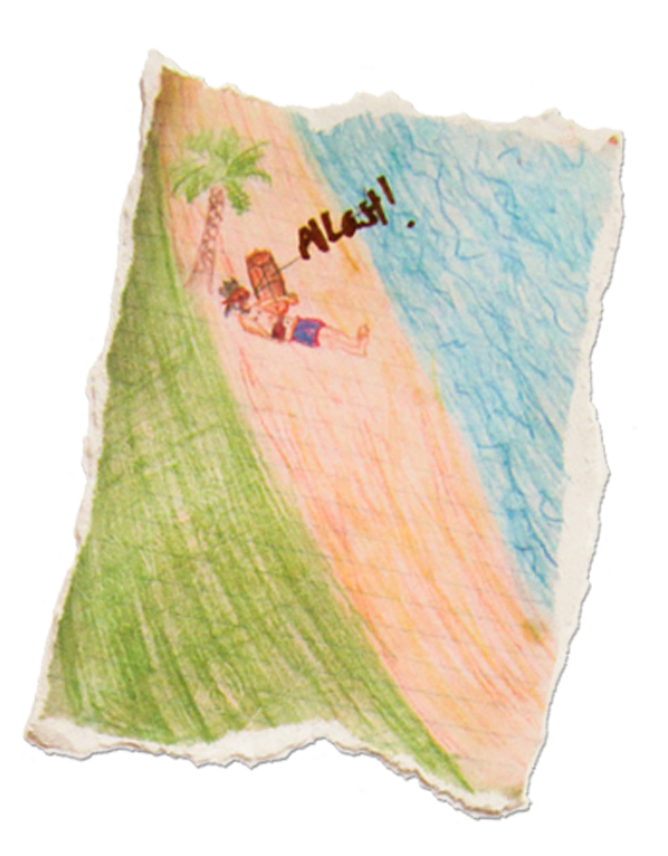
In a quiet cove beneath a bushy acacia, Michael wastes no time building
their little squat by the sea, with driftwood, a mishmash of splintered
branches and plastic flotsam. It looks like a hut cobbled together by a castaway.
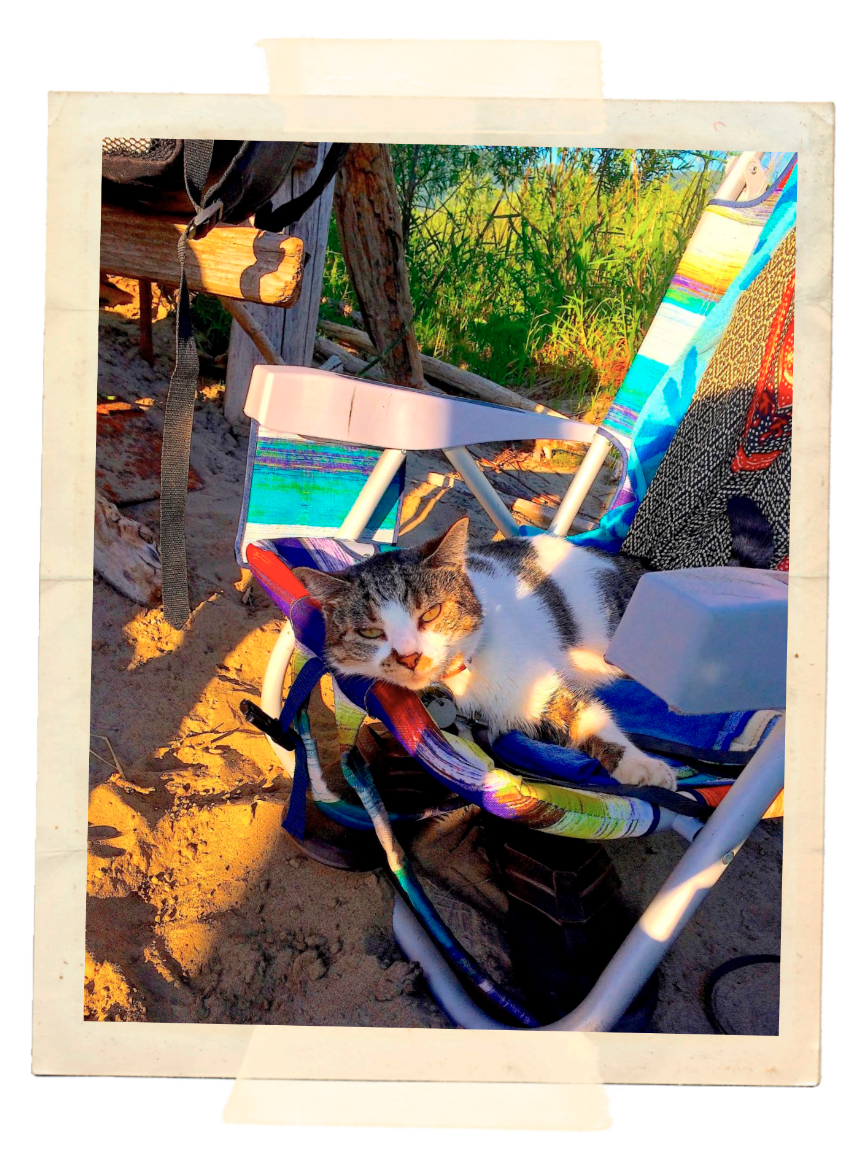
Tabor seems to love her new turf, stalking tiny lizards and crabs. One day,
Michael trails her into the beach parking lot, as she slips inside an opened
camper van. It takes him a few minutes to walk over to peer inside. A couple
of surfers in denim cut-offs appear through a fog of marijuana smoke.
“I think my cat jumped in here,” Michael says cautiously.
A good-looking guy, with cheekbones like cliffs and scruffy sun-streaked
hair, looks up. “Think you’re right,” he replies, smiling at the cat behind him.
Tabor is stretched out, belly up, on a discarded sweatshirt. “Wanna come in?
Think she’s too stoned to move.”
“I hope not,” Michael says as he steps inside the blue haze and picks up his
errant cat.
“This cat’s the real deal,” the other surfer says, puffing on his joint. “She
came in here, climbed on my chest, and started licking my eyeball. I’m like,
‘Oh, my God, cat, we’re not lovers. I’m just chilling with you, dude.’”
Later, sitting back against the tree with Tabor asleep in his lap, Michael is
guzzling beer and reading Bukowski’s Hollywood. Gazing towards the sea as
the sun dips below the horizon and listening to Tabor’s purring, he feels
something close to happiness. This little stray brought a swish of mystery
and magic into his life.
His phone buzzes on the sand, but he ignores it. He listens to Walter’s gruff
voice on speakerphone: “Christ almighty, why don’t you pick up? What’ve
you lost the use of your hands? I wish I could sit under a tree doing nothing,
with my personal banker on speed dial.”
Michael laughs. “How’d he know I’m under a tree?”
He continues smoking and reading until the sky darkens. Tabor’s nose
twitches and her eyes widen into full moons. She senses something. Michael
puts out his cigarette and glances around. In the distance, a lone coyote
moves steadily toward them, his slanted gold eyes gleaming in the dusk as
he edges closer. The coyote’s leg catches a piece of string running through
several beer cans, Michael’s makeshift alarm. It snaps him out of his daze. At
that instant, he snatches up Tabor, clips on her lead and scrambles up the
tree, where they remain until dawn.
The day after the coyote ambush, Michael relocates inland to a grassy area
outside a shopping mall with lots of foot traffic. Around noon, an old lady
teeters over and stoops to pet Tabor. She asks the cat’s name. When Michael
tells her, she stops suddenly.
“What?” she asks, surprised. Michael spells out Tabor’s name and the
woman laughs. “That’s my name too. I’m Linda Tabor.”
Both of them are momentarily struck silent by the coincidence. Linda feels
that the world is telling her something. Almost 40 years ago, after her husband died unexpectedly, she started drinking heavily. Lost control of her life
and decided to call Alcoholics Anonymous. A woman named Pat showed up
at the door and took her to an AA meeting and then dropped her back home.
Linda never had another drink and she’s been looking to pay back the debt
ever since.
Linda hands Michael a 20-dollar bill and asks, “How’d you like to try some of
my casserole? I’ll come by again tomorrow. And I’ll bring some food for the
kitty.”
He struggles to say something but his eyes mist. “Thank you,” is all he can
get out.
For the rest of the spring, Linda meets Michael twice a week with homemade
pastas, enchiladas, chili, and garlic bread. She brings cat food for Tabor too.
Michael wishes he could pour all his extra money into booze but he restrains
himself. He doesn’t want someone to see him drunk and try to take Tabor
away.
In mid-May, Stinson, Michael’s old pal from Portland, shows up talking about
a road trip to Yosemite. He’s brought his new girlfriend with him, a
dark-haired pixie of a girl named Madison. Michael likes Madison. She has a
lot of great characteristics, like owning a car. But there’s a catch: she has a
caramel-brown pit-bull mix named Bobby.
After a day hanging out on the beach, trading road stories, Michael notices
Tabor gets along with Bobby, and so he accepts Stinson’s invitation. He stops
by Linda’s and tells her he’s leaving. He gives her an address in Portland she
can write to. She asks to hold Tabor one last time. “Take care of each other,”
she says.
They reach Yosemite just before dark. It’s been a mild winter, the weather is
good, and the state park is filled with campers. They find a quiet spot and
build a fire. As Tabor and Bobby chase each other through the trees, Michael
rests against a trunk, drinking whiskey and doing a crossword. He’s been
drinking less but he figures he’s safe now. He’s with friends and he can let go
a little. The faint sounds from neighboring camps mix with the booze and the
buzz of insects, lulling Michael to sleep.
He sits up with a start sometime later. He’s not sure how much time has
passed but it’s getting dark. Glancing around, he sees Stinson and Madison
chatting on the other side of the fire, and the dog alone beside a tree. But
Tabor is gone.
He walks around the campsite. Nothing. “Tabor, where are you?” he calls.
Still nothing.
He heads into the woods, scanning the brush around the trees for the cat.
Madison and Stinson join the search. After nearly an hour, they meet back
up at their campsite. “What the hell was I thinking, bringing her here?”
Michael says, distressed.
“I was even worried about bringing Bobby,” Madison says. “This place is full
of bears.”
“Fuck!” Michael yells.
“She’s around somewhere,” Stinson says. “We just have to keep looking.”
Back in the bushes, Michael finds large paw prints in the dirt, too large for a
house cat. All around, he hears rustling and glimpses unidentifiable creatures melting into the dusk. He loses track of time stumbling through the
brush. It’s like he’s being paid back for the sin of running away from home so
many times.
He wanted to keep Tabor safe; he thought he could pull it together enough to
take care of her. Obviously, he was wrong.
Above them, an owl hoots. “Hang on,” Stinson says. “Did you hear that?”
The bird hoots again. Then they hear the faint sound of a rumbling purr.
Stinson looks up, flashing his phone light. The beam skims off branches.
Fifteen feet up, perched on the boughs of a tree, Tabor sits lazily looking
down at them.
“Oh my God,” Michael says, and he begins to cry. He’s spent much of his
adult life blacking out and blocking out bad memories. But now, he thinks, he
has a cat who depends on him and loves him wholeheartedly, and he’s endangering her. He decides to stop drinking—at least for a little while—and to pay
a visit to his foster father, Walter.

Putting the nightmare of Yosemite behind them, Michael and Tabor hitch to Montana to drop in on Walter. Along the way, they connect with Kyle, Michael’s young friend from Portland. Outside the Helena city limits, they follow dusty, desolate roads. The air is thick with the smell of horses, wood smoke, and wildflowers. On a quiet country lane, the only other signs of life in the heat-shimmering emptiness is a flock of wild turkeys slinking out of the yellow grass.

The cat is cranky and complaining from her perch on top of Michael’s backpack. “She needs lunch,” he says as they walk past a pasture. “When she gets
too hot and hungry, she gets a temper like a tiger.”
They climb over a fence into a hilly meadow. Michael leads them to a shady
spot to rest beneath a stand of blossoming cottonwoods. A few hundred
yards in the distance, a lone cow shows up on the crest of a hill. When
Michael glances up after digging through his bag for the cat’s dishes, he
notices a couple more appear.
Kyle gets out a deck of cards. Michael started dealing the cards. As he
pauses to stub out his cigarette, he looks back over his shoulder and sees
that more cows join the herd.
But Tabor is the first to sense that the herd’s mood is changing. She looks up
from her dish toward the hill, her eyes widening and her tail swelling out
into a brush, snarling. She is badly spooked.
“Holy shit! We gotta run,” Michael scrambles to his feet as the herd surges
down the hill toward them. He steps on Tabor’s leash before she can bolt to
the end of it. When he picks her up, she latches her claws into his forearm,
and tears a huge gash. But Michael feels no pain. He’s too scared to drop her
and lose her under the trampling hooves.
“What the hell?” Kyle says, freezing momentarily.
Gripping Tabor, who is trying to escape his arms, Michael yells back to Kyle,
“Run at them. Wave your arms and scream at the top of your lungs until they
back off. Then run like hell.”
Early one June morning, Michael, Tabor and Kyle get dropped off in downtown Helena. The sun rises over the Big Belt Mountains to the East and
floods the valley with light. The vintage storefronts—the Parrot Confectionary with its century-old soda fountain, Dave’s Pawn Shop sparkling with
antique gems—it all looks exactly like it did when Michael lived there. It
feels like a homecoming.
“I used to deliver milk here,” he tells Kyle as they walk through the wide
boulevards past Victorian lamp posts and turn-of-the-century rose-stone
buildings. “I was about your age.”
They turn onto Cannon Street and walk to a modest yellow clapboard house
at the end of a cul-de-sac. Michael goes around the back with Kyle trailing. A
fleet of old cars and a rusting pickup truck block the alleyway past the
backyard. Crossing the yard, he notices that the sunflowers he planted last
summer have grown into giants, their lovely, lionlike heads turned skyward.
“Walter,” Michael shouts, pushing open the screen door. Johnny Cash’s
“Folsom Prison Blues” drifts from the stereo.
Walter steps into the kitchen and sees Michael with Tabor clinging to his
shoulder. In his seventies, with a shock of white hair and silver-rimmed
glasses, Walter stands with a slight stoop. He scans Michael up and
down—the dirt, blood, grass stains on his clothes and his scabby,
scratched-up arms. “Have you been clawed by a grizzly? You look like shit.”
“Thanks,” Michael says, smiling.
“Is that a cat? You walked across America with a cat on your back? That’s
crazy. Just plain crazy.” Walter stalks off in a huff, grumbling, “Better not
upset Gus.” Over the years, he has taken in many strays but he’s down to one
skittish, smoky-gray 13- year-old Persian named Gus, who scampers out of
the living room when they enter.
“Are you mad at me?” Michael asks, cradling Tabor in his arms.
Walter reclines in his ragged, old yellow easy chair scratched to the bone by
his cats. “I don’t hear from you for ages,” he says. “Then you show up with
another cat. I’m in my retirement. I don’t want another cat.”
“I’m not dumping her on you.”
“When you have an animal, I don’t care whether it’s a dog, cat, parrot or bear,
it’s a real commitment.”
“You used to tell me, ‘Anyone who’s on the down-and-out heals himself with
animals.’”
“You’re still on the down-and-out,” Walter snaps. “We better take that cat to
the vet. There’s no telling what diseases she might’ve picked up on your
travels.”
“Tabor doesn’t have any diseases,” Michael says defensively.
At the veterinary clinic, Michael is on edge. The consultation room smells of
disinfectant. When the vet walks in, Tabor tenses.
“It’s OK, sweetheart,” the doctor whispers, stroking the cat reassuringly. He
asks about Tabor’s history. Michael tells him about finding her in the rain,
living on the beach and dodging bears in Yosemite. The vet chuckles.
“Sounds like she’s had quite an adventure.” Turning back to the cat, he feels
Tabor’s joints and puts a miniature stethoscope to her heart.
“We should have her vaccines all caught up,” Walter suggests.
The vet nods and sweeps Tabor off the table. Slung over his shoulder, Tabor
shoots Michael a look of betrayal.
When the vet reemerges with Tabor in his arms, he seems troubled. “She’s
up to date with her shots,” he begins. “But there’s another issue.”
“Is she OK?” Michael asks, immediately worried.
“She has a microchip.”
“A chip?”
“She has an owner. She was reported missing in Portland in September
2012.”

Walter looks out the kitchen window at Michael sitting on a stack of logs
against the back of the garage in the backyard, chain-smoking. Tabor is
playing in the dry grass, batting her paw at the twilight moths, blissfully
unaware that her life is about to change again. The vet gave them the owner’s phone number. Now it’s up to Michael to call.
Ten months ago, he didn’t want a cat, and now he can’t imagine living without her. His life had been ripped apart losing Mercer, but this little stray had
helped him start putting the pieces back together. He watches Tabor in a
daze and thinks back to all the nights he spent with her under the tree,
looking at the sunset, the moon and stars.
Sitting on the grass quietly, Kyle rolls a cigarette. He can see Michael is
crushed. “Maybe you should just keep her.”
“I could, but she deserves to go home.” Michael knows he can easily hit the
road and disappear. But the last thing he wants is to cause somebody else
pain. He also knows he isn’t providing the best home for her. He imagines
her happily eating food in some stranger’s fancy house. As much as he loves
Tabor, he’s always felt that he didn’t deserve her.
Walter walks outside and puts his hand on Michael’s shoulder. “This is
tough. I’m happy to make the call if you like.”
Michael nods, pulls the piece of paper out of his pocket and hands it back to
Walter. “But I wanna take her back myself.”
Walter goes back inside and pours himself a tonic and lime. He takes a sip,
picks up the phone and dials the number. In a moment, he hears Ron Buss’
voice.
“My name’s Walter Ebert. We’ve got your cat right here.”
“Oh my God, ” Ron says. “I knew she was alive. I could feel it.”
“My son found her on the streets and they’ve been traveling together. Mike
feels terrible about taking her and wants to bring her back home.”
“You honestly don’t have to go through the trouble. I can fly there tomorrow
and pick her up myself.”
But Walter explains that Michael wants one last trip with the cat. “They’ve
spent ten months together. Leaving her in 24 hours would be too abrupt, too
traumatic for both of them. It will only take a few days.”
There’s silence on the other end of the phone. “Sure,” Ron says at last.
“Whatever’s best for you. I’m unbelievably grateful to yourself and Mike.”

A few days later, after a breakfast of coffee and pancakes, Walter drops
Michael, Kyle and Tabor off on the edge of town near the on-ramp to I-90. It
took them almost two weeks to get to Montana. Now, the moment they get to
the freeway in Helena, two Native American women, with a tawny puppy
riding between them, stop and offer to drive them all the way to Spokane. It’s
an amazing offer and they get in. But after only a couple hours, Kyle can see
Michael getting anxious. Finally, Michael asks the women to let them out in
St. Regis, a tiny backwater in the western Montana wilderness.
“Here?” the woman asks, surprised. They haven’t even gotten to Idaho and
there’s nothing around them: just a freeway overpass, sky-scraping pines
and a lot of scrub brush.
“Yeah, this is great.”
Kyle doesn’t say anything. He understands what Michael is thinking. Under
normal circumstances, a ride like this would be gold. But now, it only cuts
down on the time that Michael has left with Tabor, and he wants to stretch it
out.
As the women drive away, Michael and Kyle crawl under the freeway overpass and set up a small campsite. Swirls of purple clouds float over the
mountains and lightning shoots across the darkening sky. It starts to drizzle,
then turns into a downpour. So, for two days, they cook, play cards and live
underneath the roar of traffic. Trucks, cars, motorcycles—everything rolls
over them and they ignore it all. Michael is grateful for every minute. At
night, he snuggles with Tabor in his sleeping bag.
Reluctantly, they get back on the road and make it to Idaho quickly. At a
truck stop near Coeur D’Alene, a cowboy in a battered pickup pulls over and
offers them a lift. As they load their rucksacks into the truck, Tabor slips free
of her leash and bolts away.
“Tabor, no!” Out of the corner of his eye, Michael can see wary drivers slowing down and swerving away from the cat.
The rest stop sits alongside a multi-lane freeway and Tabor hurtles towards
the traffic. Michael rockets after her as the cars blur past, blasting them with
rushes of air. Tabor slows to a trot along the white line.
“Tabor, come back to me. Please!” Michael begs, edging closer to the scared,
helpless cat, his heart pounding wildly.
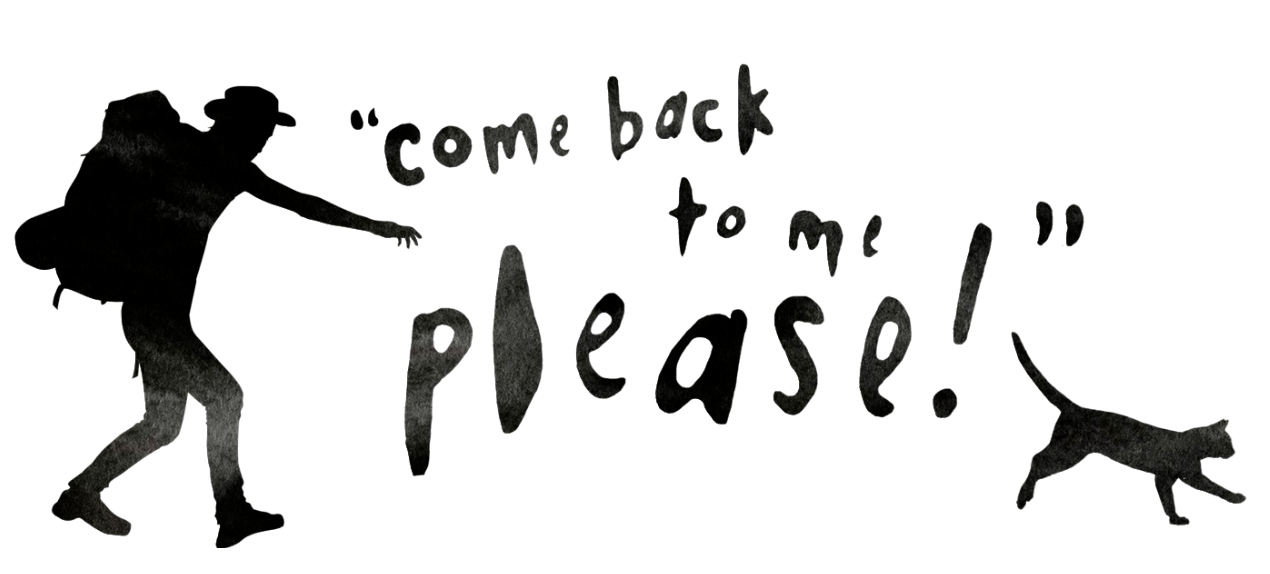
She stops, looks back at him and meows. She doesn’t move. He catches up to her and scoops her into his arms.
It’s mid-June and Portland is in full bloom and luminously green. Summer in
the Pacific Northwest is hard not to like. There’s a richness to the air that
makes even drifters feel like they’re living the good life. But for Michael it’s a
bittersweet return. He and Kyle walk to the UPS bay, and he lets Tabor down.
The cat sniffs the air and prowls around the bushes like she’s reclaiming a
lost kingdom.
“Here we are, Tabor, back in slum palace,” he says. Tears begin to stream
down his face. Kyle lights a couple cigarettes and hands one to Michael. “I’m
gonna miss her.” Michael takes a long, pensive drag. “Damn the luck,” he
says, watching the drifting seam of blue smoke. “If I loved that cat any more,
I’d blow up and die.”
They sit on the ground in silence for a while as Tabor plays in the bushes.
She gets bored, stretches and looks at Michael, as if to say, “Where next?”
Michael stands up and tries to tamp back the tears.
“Time to go,” he says, picking her up. Tabor melts into his chest with a loud,
throaty purr, ready as ever for a new adventure.
They walk along Hawthorne, passing friends along the way. Stinson, Madison, Crazy Joe and a couple others join the group. They all want to support
Michael, and soon there’s a seven-person entourage, three dogs and a cat.
“You could still change your mind,” Stinson says, flanking Michael on one
side, Kyle on the other. “You’ve had her for almost a year. She’s basically
yours.”
“I can’t. She’s not my cat,” Michael says quietly. He tries to think about the
good things. He had forgotten what it was like to be happy until Tabor came
along and cracked his heart open. Giving her back won’t change that.
As they near Berkeley Park, a few blocks from Ron’s house, Tabor digs her
claws into Michael’s T-shirt. For a moment, he is back with her in the snow,
his hoodie zipped tightly around her as they trek out of Oregon. He remembers watching movies with her in the motel and chasing her in the surf in
Ventura.
On the corner by the Bagdad Theatre, a Jazz Age picture palace, they turn
down SE 37th Avenue. The brightly painted vintage bungalows have planter
boxes and leafy front yards. Tabor’s whiskers twitch. She scrunches herself
into a little ball against his chest as they get closer. The others shuffle
behind him.
They stop in front of a white two-story house, half-hidden behind an old
juniper tree. Ron spots the little ragtag group from his window and sprints
down the porch steps. “Maa-ta!” he screams. “This is incredible. I’m over the
moon to have her back.”
Before Michael can even introduce himself, Ron slips his hands behind
Tabor’s shoulders and lifts her out of his arms.
“Oh Mata Mata, my sweet potada,” he coos. “It’s a song I wrote for her.” He
looks up at Michael. “Cats love being sung to.”
For a minute they stand in silence as Ron cradles Tabor, who scrambles away
to crawl up Michael’s leg onto his shoulder. Ron looks a little sad.
“Come inside,” he says, waving the visitors into his pristine house. Michael
doesn’t want to go but his friends instantly head inside. They’re tantalized by
the possibility that Ron will offer them some free food or maybe even a beer.
Carrying Tabor, Michael reluctantly follows.
They all sweep into the breezy white, book-lined living room and arrange
themselves on Ron’s couches. The scent of pizza wafts from the kitchen.
Buzzing around excitedly, Ron hands out mason jars of Coke.
Amid the cat art lithographs that line the wall, Michael spots a silver-framed
photo of Tabor. Plumper and more kittenish, she has the same gleam in her
gem-green eyes. She’ll be better off here, Michael thinks. He sits on the sofa
by the bay window. “There you go,” he says to Tabor as he puts her down on
the floor. She looks confused and hides under his legs.
“So tell me some of your stories,” Ron asks. “Where has Mata been this
whole time?”
Stinson can tell that Michael is hurting, so he jumps in, “We went camping in
Yosemite. We thought we’d lost her to a black bear but she was just sleeping
in a tree.”
“And Michael took her to see the ocean,” Kyle adds.
Ron smiles and looks across the room at Michael. “I can’t thank you enough.
I’ll always be grateful to you for treating Mata so well.”
“She was good to me too,” he says, without looking up. “I carried her for
3,600 miles on my back. All over Oregon, California, Idaho, Montana. And
she probably only walked half a mile. She was like the Queen of Sheba.”
“The Queen of Sheba, I love it,” Ron says, bubbling over with happiness.
Outside, a television news van pulls up. The vet in Helena told Michael’s
story to a local paper, which ran a front-page story with their photo, beneath
the headline, “The Cat Was a Rainbow in a Dark World.” A TV news station
in Portland contacted Ron to learn more about Mata Hairi’s journey. Now,
they’re here to film the reunion. Michael rises to his feet. “We gotta go.”
Michael picks up Tabor one last time, burying his face in her fur. He can’t
stop the tears as he kisses her goodbye. “You be good, Tabor.”
“Hey, you can come visit her anytime you want,” Ron says, touched.
“I’d like to.” Michael hands Tabor over.
As Ron grapples to keep hold of his cat, he digs in his pocket and pulls out a
bunch of 100-dollar bills. “Here, for your trouble.”
Michael pushes the money back in his hand. “Give it to the others.”
The others get up, too, and quickly shuffle toward the back door, the three
dogs in tow.
As Michael turns to leave, Tabor wriggles out of Ron’s arms and dives under
the sofa. Only her eyes showing, she watches Michael slip out the back door.

Ten months later, Michael and Stinson walk to Ron’s house. Halfway down the
street, they see Tabor lazily stretched out on the picnic table on the front
lawn, soaking up the morning sun. When Michael calls her, she sits up, staring in their direction, her ears twitching back and forth. They sit down at the
table to stroke her.
Stinson taps her new copper ID tag. “She’s back to being Mata Hairi again.
Must be confusing.”
“Don’t see why, I got two names,” Michael says, suddenly wistful. “Giving her
up was one of the hardest things I ever had to do aside from burying Mercer.”
“I can’t believe Ron’s still letting her out like this.”
“Oh, I’m sure he’s inside listening through the screen door. If we even try to
pick her up, he’ll probably come out and start throwing cutlery at us.”
Creto stares out of the blaze of jasmine on the porch. Tabor scrambles up the
steps to join him.
Stinson smiles and says, “Guess that’s her telling you, ‘No way, are you
taking me on another 4,000-mile road trip.’”
They walk down the street.
This article has been expanded into a book, published by Simon and Schuster.